Abacus Competition Preparation: Tips to Win at National Level
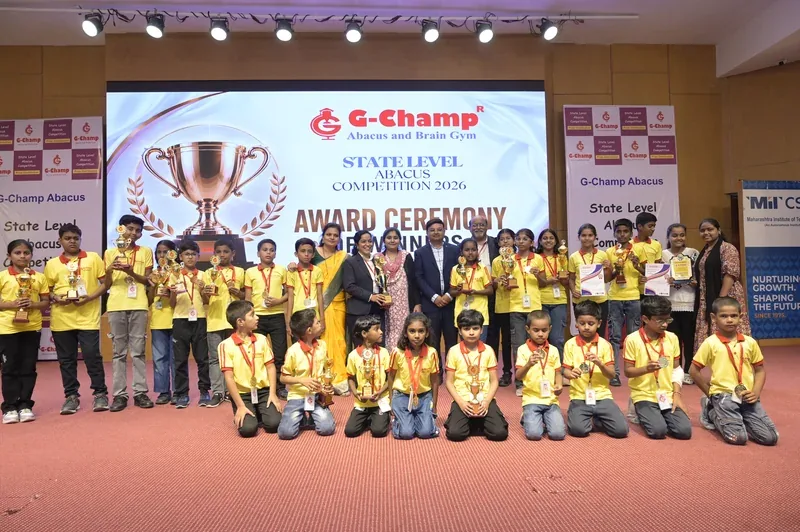
There is nothing quite like the energy inside an abacus competition hall. Hundreds of young students sit at their desks, pencils poised, eyes focused, waiting for the signal to begin. The moment the clock starts, fingers fly over invisible beads as mental calculations happen at astonishing speed. For children trained in abacus mental arithmetic, these competitions are the ultimate test of skill, speed, and composure. They are also among the most rewarding experiences a young learner can have.
Abacus competitions do far more than award medals and trophies. They build resilience, sharpen focus under pressure, and give children a sense of accomplishment that stays with them for years. Students who compete regularly develop a competitive spirit that helps them in school examinations, entrance tests, and eventually in professional careers. If your child is preparing for an abacus competition — whether it is a local inter-center event or a national championship — the preparation strategies in this guide will help them perform at their absolute best.
Types of Abacus Competitions in India
Before diving into preparation tips, it is important to understand the different types of abacus competitions available in India. Each type has its own format, difficulty level, and scale, and knowing what to expect helps you plan your preparation accordingly.
Inter-Center Competitions
These are organized by abacus training institutes like G-Champ across their franchise network. They are typically the first competitive experience for young abacus learners. Students from different centers within a city or region compete against each other, and the format is usually straightforward — a timed written test with 100 to 200 problems. These events are excellent stepping stones because they introduce children to competitive conditions without the intensity of larger tournaments.
State-Level Championships
State-level abacus competitions bring together the best performers from inter-center events across an entire state. The difficulty increases, time limits become stricter, and a mental arithmetic round is almost always included. Winners at the state level often qualify for national competitions.
National-Level Abacus Competitions
National championships are the pinnacle of abacus competition in India. Organizations like the Abacus & Mental Arithmetic Association, along with leading training brands, conduct annual national events that attract thousands of participants from across the country. These competitions feature multiple rounds — written speed tests, mental math challenges, dictation rounds, and sometimes flash anzan (where numbers flash on a screen for milliseconds). Winning at the national level is a significant achievement that earns recognition, scholarships, and opportunities to compete internationally.
Online Abacus Competitions
Since 2020, online abacus competitions have grown rapidly. These events allow students to compete from home through timed digital platforms. While they lack the atmosphere of in-person events, they offer excellent practice opportunities and are accessible to students in smaller towns who may not have easy access to national venues.
What Judges Evaluate in Abacus Competitions
Understanding the evaluation criteria helps you focus your preparation on what matters most. In most abacus competitions, judges assess three primary areas.
Speed is the most visible metric. How many problems can the student solve within the given time limit? At the national level, top performers solve 200 addition and subtraction problems in under 7 minutes — that is roughly one problem every two seconds.
Accuracy matters just as much as speed, sometimes more. Many competitions use a scoring system where correct answers earn points and incorrect answers result in deductions. A student who solves 150 problems with 100% accuracy will often outscore someone who attempts 200 but makes 30 mistakes.
Mental math ability is tested in dedicated rounds. Here, students solve problems entirely in their heads — no physical abacus, no finger movements, just pure mental visualization of bead positions. This is the skill that separates good abacus students from exceptional ones, and it is the area where strong concentration and visualization skills become decisive advantages.
Tip 1: Master the Physical Abacus Before Attempting Mental Math
This is the foundation upon which everything else is built. Many students make the mistake of rushing into mental arithmetic before they have fully mastered the physical abacus. The physical abacus is not just a beginner's tool — it is the training ground where your brain learns the precise bead movements that it will later replicate mentally.
Before moving to mental calculations, your child should be able to perform the following on a physical abacus without hesitation:
- Addition and subtraction of 3-digit numbers at a consistent speed
- Complement operations (using friends of 5 and friends of 10) without pausing to think
- Multi-row calculations with at least 10 rows of numbers
- Finger movements that are fluid, precise, and automatic
When the physical abacus movements become second nature — as automatic as riding a bicycle — the transition to mental math becomes significantly smoother. The brain cannot visualize what the hands have not thoroughly practiced.
Tip 2: Establish a Structured Daily Practice Routine
Consistency beats intensity when it comes to abacus competition preparation. A student who practices 30 minutes every day will improve faster than one who crams for 3 hours on weekends. The brain needs daily repetition to strengthen the neural pathways responsible for mental calculation.
Recommended Daily Practice Schedule (30-45 Minutes)
- First 10 minutes: Warm-up with simple addition and subtraction on the physical abacus. Start with 2-digit numbers and gradually increase.
- Next 10 minutes: Timed speed drill. Set a timer and solve as many problems as possible. Record the count and accuracy each day.
- Next 10 minutes: Mental math practice. Close your eyes, visualize the abacus, and solve problems mentally. Start with simple sums and work upward.
- Final 5-10 minutes: Dictation practice. Have a parent or sibling read numbers aloud while the student calculates the running total mentally.
Track progress in a notebook or spreadsheet. Write down the date, number of problems attempted, number correct, and the time taken. Over weeks, the improvement trend becomes visible and motivating. This daily discipline is one of the greatest benefits of abacus training — it teaches children the value of consistent effort.
Tip 3: Use Speed Drills and Timed Practice Sessions
Speed is a competition differentiator, and it only comes from deliberate practice under time pressure. Here is how to build speed systematically without sacrificing accuracy.
Progressive timing: Start by giving yourself a comfortable amount of time to solve a set of 50 problems. Note your baseline time. Each week, reduce the allowed time by 10-15 seconds. This gradual reduction trains the brain to process faster without creating anxiety.
Sprint drills: Set a timer for exactly 60 seconds and solve as many problems as you can. Rest for 30 seconds. Repeat 5 times. This interval-style training builds both speed and mental stamina — similar to how athletes train for short bursts of peak performance.
Flash card practice: Write single-digit or double-digit numbers on cards. Flip them one by one at increasing speed while calculating a running total. This simulates the pace of competition and trains rapid number recognition.
Peer challenges: Practice with a classmate or sibling. Compete against each other on the same problem set. The social element adds a healthy competitive pressure that closely mimics the real competition environment.
Tip 4: Build Mental Math Ability Through Progressive Difficulty
Mental arithmetic — solving problems by visualizing the abacus in your mind — is the skill that wins competitions. The transition from physical to mental should be gradual and systematic.
Stage 1 — Assisted mental math: Hold the physical abacus but do not touch it. Move your fingers above the beads as you calculate. Your hands go through the motions, but the beads stay still. This bridges the gap between physical and mental.
Stage 2 — Finger-only mental math: Put the abacus away. Use only your fingers (moving them in the air as if operating an invisible abacus) to solve problems. Many competition-level students use this technique — you can see their fingers twitching during mental math rounds.
Stage 3 — Pure visualization: No fingers, no abacus, no external aids. Close your eyes and visualize the bead positions changing as numbers are added or subtracted. Start with 1-digit numbers and 3 to 5 rows. Gradually increase to 2-digit numbers with 10 or more rows.
Stage 4 — Speed visualization: Once visualization is reliable, push for speed. Use a metronome or timer. Aim to process each number in the sequence within 1 to 2 seconds. At this stage, the mental abacus should feel like a natural extension of thought, not a deliberate effort.
Tip 5: Learn to Handle Exam Pressure and Performance Anxiety
Even the most skilled abacus student can underperform if nerves take over on competition day. Pressure management is a trainable skill, and it should be part of every competitor's preparation.
Conduct mock competitions at home: Simulate the exact competition conditions. Set up a desk, use the same time limits, sit in a quiet room, and have someone announce "Start" and "Stop." Do this at least once a week for the 4 to 6 weeks leading up to the event. Familiarity with the format reduces anxiety significantly.
Practice breathing techniques: Before starting a timed session, take 3 slow, deep breaths — inhale for 4 counts, hold for 4 counts, exhale for 6 counts. This activates the body's relaxation response and steadies the hands. Teach your child to use this technique before every round in the actual competition.
Develop a pre-competition routine: Athletes have warm-up routines, and abacus competitors should too. A simple routine might be: 5 minutes of easy physical abacus practice, 3 deep breaths, a positive self-affirmation ("I am prepared and I will do my best"), and then begin. Having a routine creates a sense of control and readiness.
Reframe mistakes: Teach children that one wrong answer does not ruin everything. If they make a mistake during the competition, the best strategy is to move on immediately and not dwell on it. Losing 5 seconds worrying about one error can cost them 3 more correct answers.
Tip 6: Master the Dictation Round Through Active Listening
The dictation round catches many students off guard because it requires a different skill set than written tests. Instead of reading numbers at their own pace, students must process numbers at the pace set by the announcer. Here is how to prepare specifically for this round.
Daily dictation practice: Ask a family member to read sequences of numbers aloud while the student calculates the running total. Start with 5 numbers in a sequence, then increase to 10, then 15. Vary the speed — sometimes slow, sometimes fast.
Eliminate visual dependency: During dictation practice, ensure the student is not looking at any numbers. The entire processing must be auditory. This trains the brain to convert heard numbers into mental abacus bead movements instantly.
Practice with distractions: In a real competition hall, there is ambient noise — shuffling papers, coughing, chair movements. Practice dictation with some background noise (television on low, siblings talking in the next room) so the student learns to maintain focus despite distractions.
Listen for the full number: A common mistake is beginning to calculate before the announcer has finished saying the number. If the announcer says "three hundred and forty-seven," some students start adding "three hundred" before hearing "forty-seven." Train your child to wait for the complete number, then process it. This takes one extra second but prevents costly errors.
G-Champ's Abacus Competition Track Record and Preparation Program
At G-Champ Abacus & Brain Gym, competition preparation is woven into the curriculum from the very beginning. Our ISO 9001:2015 certified abacus training program is designed across 8 progressive levels, and from Level 3 onward, students begin participating in structured competitive assessments.
With over 1200+ franchise centers across 700+ cities in India and 200,000+ students trained since 2015, G-Champ has built a deep competition ecosystem. Here is what sets our preparation apart:
- Inter-center competitions: Regular competitive events across our franchise network give students real experience before they face state or national-level events.
- Annual National Abacus Championship: G-Champ organizes a national-level competition every year, bringing together the best performers from across India. Students compete for gold, silver, and bronze medals along with trophies, certificates, and recognition.
- Structured mock tests: Our centers conduct monthly timed assessments that mirror the format and difficulty of national competitions.
- Trained teachers: Every G-Champ teacher undergoes specialized competition coaching training, enabling them to identify each student's strengths and weaknesses and tailor preparation accordingly.
- Progressive difficulty curriculum: Our 8-level system naturally prepares students for competition by increasing calculation complexity, speed expectations, and mental math requirements at each stage.
Many G-Champ students have gone on to win medals at national and international abacus competitions, and our centers are consistently recognized for producing high-performing mental math champions.
What to Expect on Competition Day
Knowing what happens on the actual day helps reduce anxiety and ensures your child is fully prepared, not just academically but logistically.
Arrive early. Reach the venue at least 30 minutes before the scheduled start time. This allows time to find the assigned seat, settle in, and do a brief warm-up. Rushing to the hall at the last minute creates unnecessary stress.
Bring the essentials. Carry 3 to 4 sharpened pencils (not pens — pencils allow faster writing), an eraser, the registration confirmation or admit card, and a water bottle. Some competitions allow a physical abacus for the written round; others do not. Check the rules in advance.
Expect multiple rounds. Most national-level competitions have 3 to 4 rounds with short breaks in between. The written speed round usually comes first, followed by mental math, dictation, and sometimes flash anzan. Mentally prepare for a 2 to 3 hour event.
Stay hydrated and eat light. A heavy meal before the competition makes the brain sluggish. Have a light, protein-rich snack (nuts, a banana, a sandwich) about an hour before the event. Drink water between rounds.
Celebrate the experience. Regardless of the outcome, participating in an abacus competition is an achievement. Every competition makes a student stronger, faster, and more confident. The medals are wonderful, but the real prize is the growth that happens along the way.
Frequently Asked Questions About Abacus Competitions
Common Questions About Abacus Competitions
Most abacus competitions in India are open to children between 5 and 14 years of age. Competitions are typically divided into categories based on the student's abacus training level — such as beginner, intermediate, and advanced — rather than strictly by age. Some national-level events also have a senior category for students aged 12 to 16. At G-Champ, students as young as 5 years old begin participating in inter-center competitions after completing their first two levels of training.
A minimum of 6 months of consistent abacus training is recommended before entering a formal competition. During this time, the student should have completed at least 2 to 3 levels on the physical abacus and begun transitioning to mental arithmetic. Students who start preparing specifically for a competition typically need 8 to 12 weeks of focused practice — including timed drills, mock tests, and dictation rounds — to feel confident and perform well on competition day.
A national-level abacus competition generally consists of three to four rounds. The written round requires students to solve 100 to 200 arithmetic problems within a strict time limit, usually 7 to 10 minutes. The mental math round tests the ability to solve problems without a physical abacus, relying entirely on mental visualization. Some competitions also include a dictation round where numbers are read aloud and students must calculate the answer in real time. Advanced competitions may add a flash anzan round where numbers are displayed on a screen for fractions of a second.
Yes, G-Champ integrates competition preparation into its standard 8-level abacus curriculum. From Level 3 onward, students participate in timed assessments and mock competitions at their local center. G-Champ also conducts inter-center competitions across its 1200+ franchise centers, giving students real competitive experience before they enter state or national events. Additionally, G-Champ organizes an annual National Abacus Championship where top performers from across India compete for trophies, medals, and certificates.
Parents play a crucial role in competition preparation. They can help by maintaining a consistent daily practice schedule of at least 30 minutes, creating a quiet and distraction-free study environment, and timing practice sessions to build speed awareness. Parents can also conduct dictation practice by reading numbers aloud for the child to calculate mentally. Encouraging the child without applying pressure, celebrating small improvements, and ensuring adequate sleep and nutrition before the competition day all contribute significantly to the student's performance and confidence.
Ready to Get Started?
Join 1200+ franchise partners across India or enroll your child in our brain development programs.